


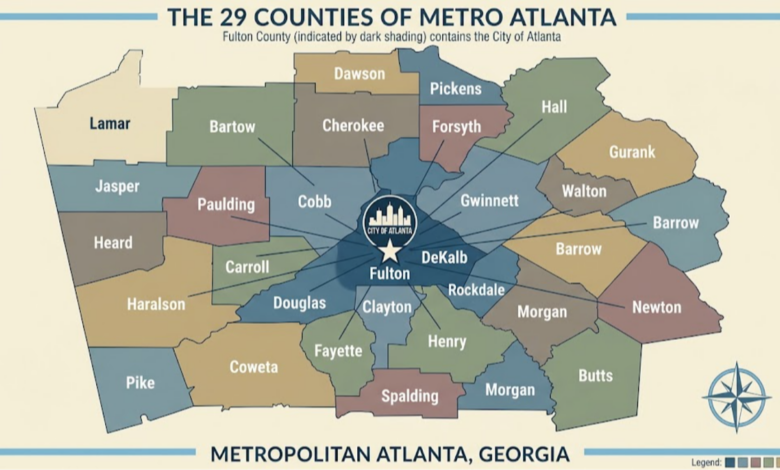
New Census figures confirm Atlanta’s steady growth, placing the regional hub just behind Texas juggernauts Houston and Dallas.
Metro Atlanta’s relentless regional growth has reached another national milestone. According to the latest figures released by the U.S. Census Bureau, the Atlanta–Sandy Springs–Roswell Metropolitan Statistical Area (MSA) has officially risen to become the sixth largest metropolitan area in the United States out of 387 nationwide.
The surge highlights decades of sustained population influx, job creation, and corporate relocation across the 29-county regional footprint, solidifying Metro Atlanta as the premier economic and cultural engine of the American South.
The Top 10 U.S. Metropolitan Areas
The latest rankings reflect significant demographic shifts, with Sunbelt metros continuing to gain ground on traditional population centers. Metro Atlanta now trail only five major urban hubs: New York, Los Angeles, Chicago, Dallas, and Houston.
| Rank | Metropolitan Statistical Area (MSA) |
| 1 | New York–Newark–Jersey City, NY–NJ |
| 2 | Los Angeles–Long Beach–Anaheim, CA |
| 3 | Chicago–Naperville–Elgin, IL–IN |
| 4 | Dallas–Fort Worth–Arlington, TX |
| 5 | Houston–Pasadena–The Woodlands, TX |
| 6 | Atlanta–Sandy Springs–Roswell, GA |
| 7 | Washington–Arlington–Alexandria, DC–VA–MD–WV |
| 8 | Miami–Fort Lauderdale–West Palm Beach, FL |
| 9 | Philadelphia–Camden–Wilmington, PA–NJ–DE–MD |
| 10 | Phoenix–Mesa–Chandler, AZ |
Driving the Regional Boom
Metro Atlanta’s steady rise past competing major regions—including the Washington, D.C. corridor, South Florida, and Greater Philadelphia—stems from a combination of economic diversification and relative housing affordability compared to coastal centers.
- Corporate Attraction: Key investments in technology, media production, logistics, and corporate headquarters continue to draw workforce talent nationwide.
- Transit & Infrastructure: Regional expansion projects and multimodal developments across central and suburban hubs remain central to accommodating incoming residents.
- Housing & Urban Density: Submarkets across the metropolitan area continue to adapt through increased residential development, mixed-use corridors, and adaptive reuse projects.
As the region solidifies its standing among the nation’s top six metropolitan powerhouses, regional leadership and local municipalities face heightened demands to expand transit infrastructure, address housing supply, and maintain sustainable long-term development.