

Jonesboro Joins Metro’s Marijuana Shift
How Seven Atlanta-Area Cities Decriminalized Small-Amount Possession, City by City from 2016 to 2026

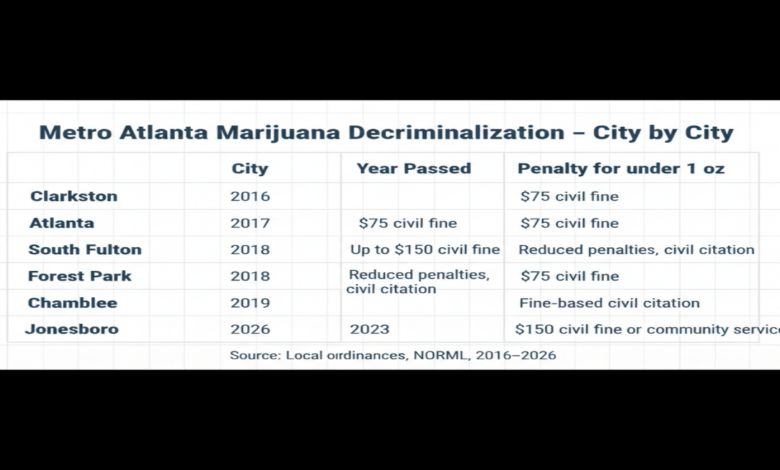
How Seven Atlanta-Area Cities Decriminalized Small-Amount Possession, City by City from 2016 to 2026
JONESBORO, GA — With its latest vote to decriminalize small amounts of marijuana, the City of Jonesboro has become part of a nearly decade-long wave of metro Atlanta communities rethinking cannabis laws. The move caps a regional shift that began nearly ten years ago and continues to gain momentum.
Under Jonesboro’s new ordinance, residents caught with less than one ounce of marijuana will face a small civil fine rather than arrest or jail time. City officials said the change reflects a practical approach — aligning with neighboring municipalities that have reduced penalties to focus police resources on serious crime.
The Order of Change Across Metro Atlanta
The path to regional reform has been gradual but consistent. Here’s how local cities have adopted decriminalization ordinances over time:
- 2016 – Clarkston became Georgia’s first city to decriminalize marijuana possession, setting a $75 fine instead of arrest.
- 2017 – Atlanta followed, passing one of the most publicized ordinances in the state, making possession of less than an ounce punishable only by a $75 fine.
- 2018 – South Fulton adopted similar measures shortly after incorporating as a city.
- 2019 – Forest Park joined the movement, further normalizing the policy in the southern metro area.
- 2020 – Savannah, outside the Atlanta region but influential statewide, passed its decriminalization measure and encouraged others to follow.
- 2021 – Chamblee and Decatur enacted local ordinances aimed at reducing racial disparities in enforcement.
- 2022 – Stonecrest approved its version, emphasizing community-level reform in DeKalb County.
- 2023 – East Point updated its municipal code with a fine-based approach.
- 2026 – Jonesboro is now the latest city to adopt decriminalization, extending reform further into Clayton County.
Altogether, ten Georgia jurisdictions have passed similar legislation, covering much of the metro area across Fulton, DeKalb, and Clayton Counties.
A Regional Shift Toward Reform
Advocates say these local ordinances reflect growing public support for marijuana reform. Since 2016, grassroots campaigns have pushed cities to rewrite outdated laws that disproportionately impact Black and low-income residents.
Local law enforcement officials note that the shift also helps reduce court backlogs and refocus resources on major crimes, while elected leaders frame the changes as a step toward fairness and efficiency.
What Comes Next
As Georgia’s state laws remain unchanged, city-level reforms like Jonesboro’s showcase how municipalities are leading the conversation around justice and public policy.
For residents, it’s a sign that the conversation about marijuana criminalization — once politically risky — has become part of the mainstream debate in Georgia’s urban centers.






One Comment