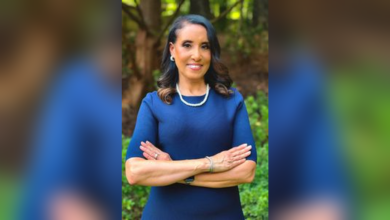



Former Atlanta mayor shatters a historic political barrier, becoming Georgia’s first woman and first Black governor while ending more than two decades of Republican control of the Governor’s Mansion.
By Miles J. Edwards | A.T.L. N.E.W.S. Georgia Bureau
November 4, 2026
ATLANTA, GA | November 4, 2026 — History was made in Georgia Tuesday night as former Atlanta Mayor Keisha Lance Bottoms won the state’s gubernatorial election, becoming the first Black woman elected governor in the history of the United States. Her victory marks three significant milestones in American politics: the first woman elected governor of Georgia, the first Black person elected to the state’s highest executive office, and the first Black woman elected governor anywhere in the nation.
Bottoms, a Democrat, defeated Republican businessman Rick Jackson in the November 3 general election, bringing an end to more than two decades of Republican control of Georgia’s Governor’s Mansion. Her victory represents a major political shift in a state whose history has been closely intertwined with slavery, segregation, the civil rights movement, and the long struggle for equal representation in government.
For generations, Black women have played instrumental roles in organizing voters, advancing civil rights, and shaping American political movements. Despite those contributions, no Black woman had ever been elected to lead one of the nation’s 50 states. Bottoms’ election changes that distinction and establishes a new chapter in the history of political representation in the United States.
From Atlanta City Hall to the Governor’s Mansion
Bottoms, 56, entered the gubernatorial race with considerable experience in municipal and national politics. Before becoming Georgia’s governor-elect, she served on the Atlanta City Council and later as the city’s 60th mayor from 2018 until 2022. Her administration navigated several major challenges, including the COVID-19 pandemic, nationwide demonstrations following the murder of George Floyd, and growing public debate over policing, economic inequality, and public safety.
Following her departure from City Hall, Bottoms joined President Joe Biden’s administration, serving in several roles, including director of the White House Office of Public Engagement. Her experience in local government and Washington helped shape a gubernatorial campaign focused on economic opportunity, education, healthcare accessibility, and affordability for Georgia families.
Her election also places her among a relatively small group of former major-city mayors who have successfully transitioned into statewide executive leadership. Unlike Atlanta, where Democratic candidates have maintained a longstanding electoral advantage, winning the governorship required Bottoms to reach voters across Georgia’s diverse metropolitan, suburban, and rural communities.
A Historic Political Transformation in Georgia
The significance of Bottoms’ victory extends beyond the governor’s office. Georgia, a former Confederate state and birthplace of numerous prominent civil rights leaders, has experienced substantial demographic and political changes over the past several decades. The growth of metropolitan Atlanta, changing suburban voting patterns, and increased political participation among historically underrepresented communities have contributed to the state’s increasingly competitive elections.
Bottoms’ victory follows several historic developments in Georgia politics, including the election of Raphael Warnock as the state’s first Black United States senator. It also follows the gubernatorial campaigns of Stacey Abrams, who became the first Black woman nominated for governor by a major political party in American history in 2018.
Abrams challenged Republican Brian Kemp in both 2018 and 2022, losing both elections while helping draw national attention to voting access and political participation in Georgia. Her organizing efforts and those of numerous grassroots organizations helped expand political engagement across the state, particularly among younger voters and communities of color.
The 2026 election marked the third consecutive Georgia gubernatorial contest featuring a Black woman as the Democratic nominee. Unlike the previous two elections, however, the Democratic candidate emerged victorious, securing a historic achievement that had remained out of reach for generations.
Defeating a Billionaire Republican Opponent
Bottoms faced Republican nominee Rick Jackson, the billionaire founder of Jackson Healthcare, in a contest shaped by competing visions for Georgia’s economic and political future. Jackson entered the race as a businessman and political outsider, emphasizing public safety, tax reductions, economic development, and limited government regulation.
The Republican candidate invested more than $200 million of his personal wealth into the election, making campaign financing one of the contest’s defining issues. Despite his substantial financial advantage, Bottoms secured the governorship by campaigning on healthcare expansion, increased education funding, higher wages, and economic opportunities for working families.
Throughout the campaign, Bottoms emphasized the importance of expanding Medicaid, increasing compensation for teachers and public employees, addressing housing affordability, and challenging Georgia’s restrictive abortion laws. Her platform contrasted with Jackson’s proposals for lower taxes, reduced government regulation, and a more business-oriented approach to state government.
A New Administration and the Challenges Ahead
Bottoms will succeed Republican Governor Brian Kemp, who is completing his second consecutive term and was constitutionally ineligible to seek another. Her victory makes her the first Democrat elected governor of Georgia since Roy Barnes won the office in 1998, ending a Republican winning streak that began with Sonny Perdue’s election in 2002.
Although the governorship has changed parties, Bottoms will enter office facing a state legislature where Republicans continue to wield significant influence. This political division could complicate efforts to advance some of her administration’s priorities, particularly Medicaid expansion, reproductive rights, and major changes to education and tax policy.
Her ability to work with legislative leaders, build bipartisan support, and deliver on campaign commitments will help determine the direction of her administration. The transition from governing Atlanta to leading a state of more than 11 million residents also presents a different set of responsibilities, including overseeing statewide agencies, managing the budget, and addressing the needs of communities with widely varying economic and political interests.
Madam Governor: A New Chapter in American History
As Bottoms celebrated her victory in Atlanta Tuesday night, the historical implications extended far beyond Georgia’s borders. Her election represents a breakthrough in a nation where women, particularly Black women, have historically been underrepresented in executive leadership despite their longstanding contributions to public service and political organizing.
Georgia’s election results also illustrate the changing nature of political representation in the South, a region where racial and gender barriers once prevented Black Americans and women from participating fully in the democratic process. While Bottoms’ election does not eliminate the economic, social, and political challenges confronting the state, it represents a significant milestone in the continuing evolution of American democracy.
More than two centuries after Georgia became a state, its voters have elected their first woman governor. For the first time in United States history, a Black woman has also been elected to lead a state, creating a distinction that will remain part of the nation’s political record for generations.
Georgia has made history, and Keisha Lance Bottoms will enter that history as Madam Governor.