

Opinion | By Miles Edwards
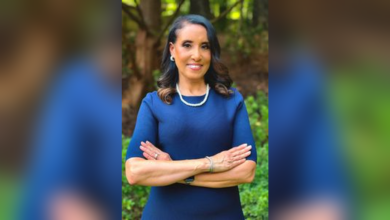
Growing up as an eastside kid of metro Atlanta, and as an official product of South DeKalb County, my natural choice for Georgia governor was Michael Thurmond, the former DeKalb County school superintendent and county CEO. His public service connects with a community I know and care about. But Thurmond’s campaign did not advance to the general election, and former Atlanta Mayor Keisha Lance Bottoms secured the Democratic nomination. She is now my choice for governor.
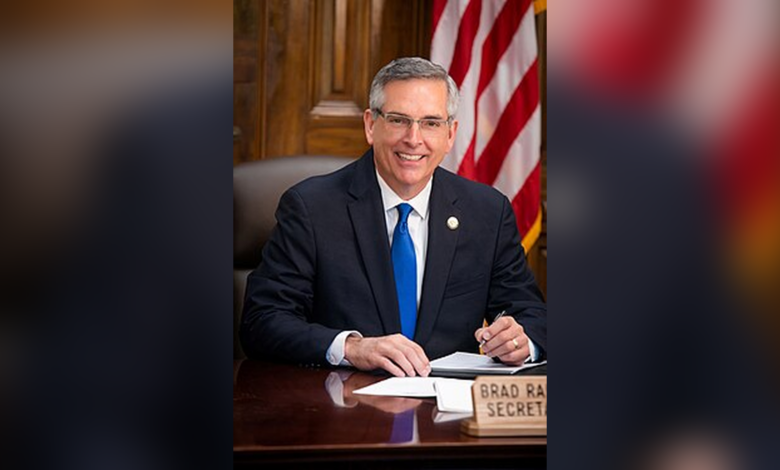
There is, however, a Republican who earned enough respect from me that, had he remained in the race, he would have deserved serious consideration for my vote: Georgia Secretary of State Brad Raffensperger. He finished third in the Republican primary, ending his bid for governor, but that defeat does not erase what he did when Georgia—and the country—needed him to stand his ground. Nearly six years after the 2020 election, I have not forgotten.
On January 2, 2021, President Donald Trump called Raffensperger and pressed him to “find 11,780 votes,” enough to reverse his loss in Georgia’s presidential election. Raffensperger rejected the false claims presented to him and refused to deliver the outcome Trump wanted. A president from his own political party was pressuring him to help overturn an election defeat, while threats and harassment were being directed at election officials and his family. He stood his ground anyway.
That matters to me as a Georgia resident. The authority voters give an elected official comes with responsibilities and limits, and a powerful person’s disappointment does not give an election administrator permission to change the result. My respect for Raffensperger does not require agreement with every policy he supports. It comes from watching him face extraordinary pressure and uphold his responsibility to the voters.
I also want to be fair about Gov. Brian Kemp: he resisted efforts to overturn Georgia’s election result, too. In December 2020, he and then-Lt. Gov. Geoff Duncan publicly explained that a special legislative session to select a different slate of presidential electors was not permitted under state or federal law. He deserves credit for that decision, even as I question the political choices he has made since.
Kemp reconciled politically with Trump and reaffirmed his support for him in 2024. Now, he is campaigning for Republican gubernatorial nominee Rick Jackson, appearing alongside him and encouraging Georgians to make Jackson his successor. To me, that support raises a serious question about what Kemp believes Georgia needs after the pressure he witnessed firsthand.
Jackson has repeatedly given voters reason to question how independent he would be from Trump. During his primary campaign, he promised to be like Trump with a “Southern tone,” and he has declared that he would be Trump’s “favorite governor.” I take those statements seriously. Georgia already experienced what happened when Trump wanted an election result changed, so I find little reassurance in a candidate advertising his ambition to govern in that man’s image.
His education agenda gives me another reason for concern. Jackson launched his campaign with promises to eliminate “woke ideology” and diversity initiatives in schools. His current platform includes a section titled “Stop Woke Ideology and Ban Reverse Discrimination,” with a pledge to prohibit DEI programs in state government, public universities and classrooms. Those are his stated priorities, and voters deserve to know exactly what they would mean for teachers and students.
When Jackson says he wants to stop “woke,” what teaching does he intend to stop? Would Georgia follow Florida Gov. Ron DeSantis’ approach to restricting instruction about race, or the curriculum campaigns associated with Moms for Liberty, which identifies critical race theory among its education concerns? Florida continues to require Black history instruction, but its restrictions and rejection of the AP African American Studies course demonstrate why a promise to fight “indoctrination” deserves close examination. I want Jackson to explain where he draws the line between political advocacy and an honest education about racism, slavery, segregation and the struggle for equal rights.
My concern also comes from watching Trump’s administration seek greater control over how American history is presented. Its review of Smithsonian exhibitions explicitly included the National Museum of African American History and Culture, with officials examining historical framing and alignment with the administration’s interpretation of American ideals. To me, that raises the danger of political leaders deciding which parts of Black America’s experience are acceptable for the public to encounter. Is that the example Jackson intends to follow in Georgia’s classrooms?
Black history is part of the history of the state Jackson wants to govern. Georgia’s children deserve to learn about Black communities’ achievements, institutions, struggles and contributions with depth and accuracy. The proposals cited here do not establish that Jackson intends to eliminate Black history instruction, but his campaign language leaves me wanting a clear commitment that teachers will be free to teach it honestly. Our children’s education deserves a more specific answer than a slogan.
Jackson has since emphasized his independence from Trump, saying during the October debate that he would stand up to anyone, as Kemp has done. Voters can weigh that assurance against his earlier promises and continued campaign appearances with Trump. For me, those earlier promises remain difficult to forget, especially when Jackson is asking us to trust his judgment while attacking the judgment of his opponent.
At a recent campaign appearance with Kemp, Jackson criticized Bottoms’ decision not to seek a second term as Atlanta mayor, describing it as abandoning the city. He also argued that bad mayors do not make good governors. Bottoms’ record deserves scrutiny, as every candidate’s record does, but voters deserve an accurate account of what happened: she completed her elected term and left office in January 2022 after choosing not to seek reelection. Declining another four years is a decision voters can question; it is not the same as walking out before the job was finished.
I would rather hear a serious discussion of Bottoms’ decisions in office than have that distinction blurred into a campaign slogan. If Jackson wants to make judgment and commitment the test, his own enthusiasm for Trump belongs in the conversation. I do not want a governor whose ambition is to become the Southern version of a president who tried to overturn Georgia’s vote. I want someone whose loyalty to Georgians holds firm when the White House wants something else.
Kemp knows how serious that pressure was because he experienced it. That is why watching him promote Jackson leaves me shaking my head. After everything Georgia went through, here he is parading around behind a man who promised to be Trump with a Southern tone, as if he were the next best thing to happen to Georgia since Coca-Cola, Chick-fil-A or Waffle House. Governor, we already have enough places in Georgia serving things scattered, smothered and covered. Our election results should never be on that menu.
That brings me back to Raffensperger. When Trump wanted a different answer, he stood by the result and did the job voters elected him to do, despite pressure from the most powerful person in his party. We should expect that conduct from everyone who holds office, and we should recognize it when the pressure becomes real. Campaign promises about independence mean more when an official has demonstrated it at a moment of consequence.
I still support Keisha Lance Bottoms, but I can support her and acknowledge that a Republican earned my respect through his conduct in office. Voters should leave room for that kind of judgment. So, Secretary Raffensperger, this eastside Atlanta kid wants to give you your credit: you lost your bid for governor, but you did not lose the respect you earned from me.
And Secretary Raffensperger, if you’re looking for a job after leaving office, we might have something for you over here on Glenwood Road at Belvedere Fresh. We could use some stand-up folks like yourself around here. If you can hold your ground with Trump on the telephone, I figure you can hold your ground on Glenwood. : (=) Thank you for your service, sir!
Opinion Disclaimer: The views expressed in this opinion piece are solely those of the author and do not necessarily reflect the views or positions of A.T.L. N.E.W.S. or Art, Trade & Lifestyle Media Group. Publication does not constitute an endorsement of any candidate or political party.