
Stone Mountain: Georgia’s Majestic Landmark with a Complicated Legacy
A deep look at how Georgia’s most iconic landmark is redefining its legacy for a new generation

A deep look at how Georgia’s most iconic landmark is redefining its legacy for a new generation
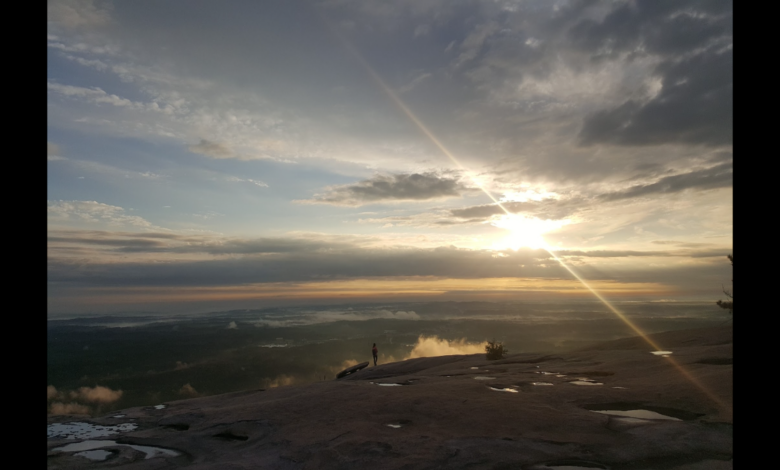
Stone Mountain Park is one of Georgia’s crown jewels—a sprawling 3,200-acre escape where nature, recreation, and history converge just 15 miles east of downtown Atlanta. Towering 1,686 feet above sea level, the solid granite dome is visible for miles, an unmistakable silhouette rising from the surrounding trees. Each year, millions of visitors make their way to Georgia’s most popular attraction, drawn by its scenic trails, festivals, and the sense of simple wonder that comes from standing atop one of the largest granite outcroppings in the world.
For many families, the park is synonymous with tradition. Summer weekends are alive with boaters on Stone Mountain Lake, hikers tackling the one-mile trek to the summit, and families picnicking under the shade of oaks. The annual Yellow Daisy Festival celebrates Southern craftsmanship and creativity, while the Stone Mountain Christmas transforms the park into a winter wonderland of lights, music, and laughter. Then, each spring, crowds gather at dawn for the Easter Sunrise Service—one of the state’s oldest and most spiritual traditions.
But beyond its beauty and festivities, Stone Mountain carries a story that is far more complicated—and far more revealing about Georgia’s cultural evolution.
A Granite Monument and Its Shadows
Long before it became a state park, Stone Mountain was private property. In the early 20th century, it found infamy as a gathering spot for the Ku Klux Klan. The white supremacist group used the mountain as a backdrop for cross burnings, ceremonies, and recruitment events—acts that left a scar on the landscape and in the region’s collective memory. The site’s association with the reemergence of the Klan in 1915 is a historical truth that still shapes public perception today.
In 1916, sculptor Gutzon Borglum—who would later carve Mount Rushmore—was commissioned to design a massive Confederate memorial on the mountain’s face. The project, riddled with political disputes and halted by financial issues, wasn’t completed until the 1970s. The finished carving—depicting Confederate leaders Jefferson Davis, Robert E. Lee, and Thomas “Stonewall” Jackson—remains the largest bas-relief sculpture in the world. For some, it is a marvel of artistry and engineering. For others, it is an unhealed reminder of a painful past.
Rewriting the Narrative
Today, Stone Mountain Park stands at a crossroads between heritage and healing. Many Georgians and visitors are calling for deeper historical context to accompany the monument, while others advocate for its removal or reimagining. State officials and park conservators have worked to balance preservation with inclusivity, introducing interpretive exhibits and community events that reflect a broader, more honest history.
Local artists, educators, and activists have also begun reclaiming the mountain as a space for dialogue and unity. New tours, educational programs, and cultural festivals showcase the diverse communities that shape modern Georgia, inviting visitors to see Stone Mountain not only as a monument of the past but as a canvas for transformation.
The Spirit of Georgia in Stone
Standing atop the mountain’s peak, visitors can gaze out over the Atlanta skyline in one direction and the rolling expanse of rural Georgia in another—a view that mirrors the state’s dual identity: rooted in history, yet always reaching forward. Beneath the stone’s weathered surface lies a story of contradiction, resilience, and renewal.
Stone Mountain remains a place of extraordinary natural beauty and human complexity. It invites visitors to climb, to reflect, and—perhaps most importantly—to confront the layers of history that lie just beneath its granite skin.