


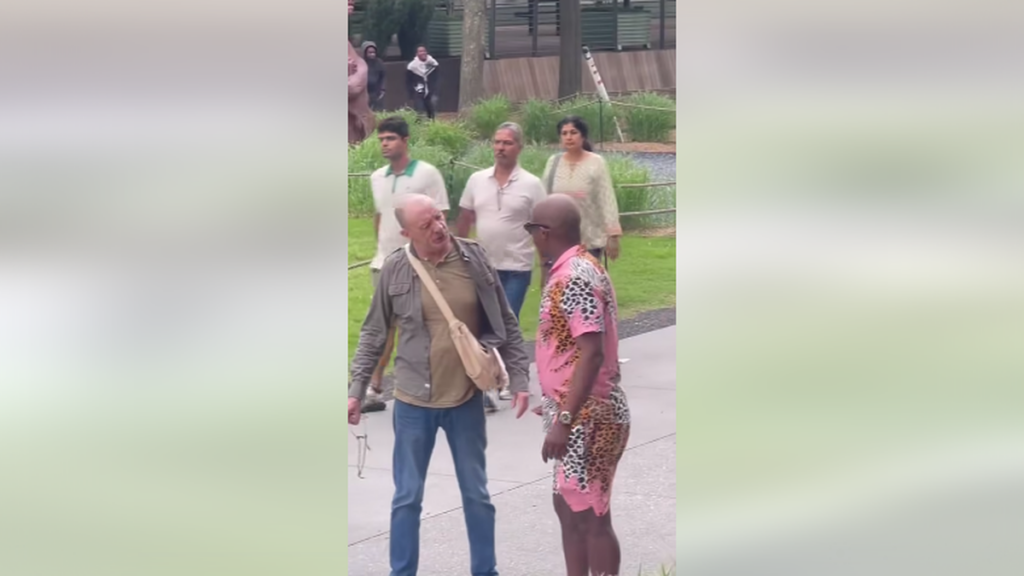
Unpacking the history of gentrification behind the viral Atlanta BeltLine video.
The viral footage captured on the Atlanta BeltLine’s Eastside Trail serves as a jarring microcosm of the tension currently simmering in urban centers across America. In the video, a visibly intoxicated White man in a engages in a racist rant, hurling slurs and repeatedly screaming, “My neighborhood!” at another Black man on the Beltline.
While the incident is a documented case of public harassment, the location of the outburst adds a profound layer of irony and historical pain. The confrontation took place in the Old Fourth Ward (O4W), a district whose identity has been fundamentally reshaped by rapid gentrification and the development of the BeltLine itself.
The Scene: A Modern Playground with a Complex Past
The video unfolds along the steps of the new BeltLine Kroger, near the North Avenue bridge, a stone’s throw from the massive Ponce City Market redevelopment. The backdrop is unmistakable: sleek, industrial-chic apartment complexes, curated greenery, and a steady stream of recreational traffic.
For the man in the video, this environment served as a justification for his territorial aggression. By shouting “My neighborhood,” he was asserting a sense of exclusive ownership. However, his claim stands in stark contrast to the demographic reality of the area’s lineage.
The History of the Old Fourth Ward
Before it was a hub for luxury lofts and $15 cocktails, the Old Fourth Ward was the heart of Black Atlanta.
- The Birthplace of a Movement: The neighborhood is famously the birthplace of Dr. Martin Luther King Jr. and the home of the historic Ebenezer Baptist Church.
- Economic Resilience: During the era of segregation, the “Sweet Auburn” district nearby became the center of Black commerce, known globally as a “Black Mecca.”
- Systemic Disinvestment: Following integration and mid-century urban renewal projects, the area suffered decades of systemic neglect and “redlining,” which kept property values low but allowed a vibrant, tight-knit Black community to persist.
The BeltLine Catalyst and the Cost of Progress
The creation of the Eastside Trail—the most successful portion of the 22-mile BeltLine loop—transformed the O4W almost overnight. What was once an abandoned rail corridor became the most valuable real estate in Georgia.
| Metric | Before BeltLine (approx.) | After BeltLine (Current) |
| Demographics | Historically 75-90% Black | Majority White |
| Average Rent | Affordable / Working Class | Among the highest in Atlanta |
| Land Use | Industrial / Residential | Mixed-use / Luxury Residential |
This “urban renewal” has come at the cost of displacement. Thousands of Black residents who lived in the Fourth Ward for generations were priced out by skyrocketing property taxes and the demolition of affordable housing.
The Irony of “Ownership”
When the man in the blue shirt screams “My neighborhood,” he is speaking from a position of “new” ownership—one granted by the capital and cultural shift that arrived with the BeltLine. His racist tirade highlights a bitter reality for many long-term Atlanta residents: the feeling that the city’s progress is predicated on their removal.
The video is more than just a recording of a drunk man’s hate speech; it is a visual representation of the friction between a neighborhood’s storied Black history and its gentrified present. As the cameras rolled, the man’s claims of territory felt less like a defense of home and more like an echo of the exclusion that has defined the area’s latest chapter.